
"The prime minister is thinking of having a meeting of all political leaders and it could take place in the second week of next month," sources in the government said. While the agriculture scenario was comfortable spiralling crude oil prices in the international market was causing a concern, they said. Crude oil reached $96 a barrel mark early this month. However, it has come a notch lower now.

Indian equity markets experienced a significant downturn as geopolitical tensions in West Asia, rising oil prices, and foreign fund outflows dampened investor confidence. The Sensex and Nifty both fell sharply in early trade, reflecting broader global market weakness.

This means lower losses on fuel sales by Indian oil companies and a shrinking oil subsidy bill for the government.

The real benefits can be seen when prices stabilise, preferably at levels acceptable to both consumers and producers.

Crude prices, which has become a big concern for the government fighting inflation, softened to about $104 to a barrel on the New York Mercantile Exchange after touching $107 a barrel, its highest level since September 2008.

Crude oil's long price slide might be ending, feel some experts. Last Friday, the price of Brent crude, seen as a benchmark for what India uses, saw a low of $75.3 a barrel - it is now trading around $79. The fall has been nearly a third from its high seen in June, only five months earlier.
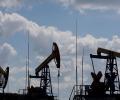
Global energy markets saw a significant correction as oil prices nosedived following Iran's announcement that the Strait of Hormuz has been fully reopened, dismantling the 'war-risk' premium that had gripped the market.

Government sources indicate a potential increase in petrol and diesel prices due to rising global crude oil costs and losses incurred from a prolonged freeze on retail rates.

Brent crude oil prices may rise to $110 a barrel in 2023, up nearly 33 per cent from the current levels, said analysts at Morgan Stanley, in a recent note. This is, however, lower than the peak level of nearly $127 touched earlier in 2022 as geopolitical concerns took centre stage amidrising demand. "Looking ahead, Brent oil price growth will decelerate even more in the coming quarters. "This comes even as our global oil strategist expects a rise in oil prices back to $110 a barrel by the second half of 2023.

India's crude oil imports from Russia reached a record high of approximately 2.73 million barrels per day (mbpd) in June, driven by discounts of $2-5 a barrel. This surge comes as the West Asia crisis disrupted supplies from traditional sources and China reduced its own purchases, leading Russia to offer more favourable terms to India.

Indian benchmark equity indices experienced a significant downturn, with the Sensex plummeting over 800 points and the Nifty falling sharply, driven by rising crude oil prices, geopolitical tensions, and foreign capital outflows.
Indian benchmark indices, Sensex and Nifty, closed lower, primarily due to a sharp sell-off in IT stocks, a fresh surge in crude oil prices, and sustained outflows from foreign institutional investors. The Sensex dropped over 300 points, while the Nifty declined by 77.95 points.

The latest decision of the Organisation of Petroleum Exporting Countries and its allies, commonly known as Opec+, to boost output is being seen as an attempt to regain market share lost to the US, Brazil, and other oil producers, who have been increasing production recently.
The country's fiscal deficit, as a percentage of GDP, would be wiped out if the crude oil price, as measured with the Indian basket, touch $80 per barrel.

Indian benchmark indices Sensex and Nifty climbed in early trade, driven by buying in blue-chip stocks like Reliance Industries and ICICI Bank, alongside a notable cooling in crude oil prices.

The banking sector in the country is stable, capital is available and credit offtake is poised to take off, he said at a webinar organised by Bharat Chamber of Commerce. "We are not unique to the phenomenon of uncertain growth and high inflation due to the pandemic.

Over the past two decades, India has witnessed several major petrol price hikes, driven by global crude oil fluctuations, economic crises, currency depreciation and geopolitical conflicts. How did we get from Rs 34 to over Rs 100 today

The Indian rupee weakened against the US dollar due to a strengthening dollar, high crude oil prices, and foreign fund outflows amid geopolitical uncertainties.

Indian equities on Dalal Street saw volatility as global market trends and oil price hike impacted investor sentiment. Track Sensex, Nifty50 movement and key market drivers for Apr 23, 2026.

The ongoing oil price decline is mainly a result of oversupply in the global market

Indian stock market benchmark indices Sensex and Nifty experienced a significant decline, driven by escalating tensions in the Middle East and rising crude oil prices.

India's wholesale price inflation surged to 8.30 per cent in April, up from 3.88 per cent in March, primarily driven by a significant increase in the prices of fuel, power, and crude petroleum, according to data from the commerce and industry ministry.

Petrol and diesel prices in India have been increased by Rs 3 per litre each, marking the first rate hike in over four years. This decision follows a period of stable prices during recent state elections, despite rising global crude oil prices and significant losses for fuel retailers.

The Indian rupee depreciated 20 paise to close at a fresh all-time low of 94.88 against the US dollar, driven by surging Brent crude oil prices, hovering around USD 115 per barrel, and persistent foreign capital outflows.

The government on Tuesday increased the windfall profit tax on crude oil produced in the country and reduced the levy on exports of diesel. The tax, levied in the form of Special Additional Excise Duty or SAED, on domestically produced crude oil was increased to Rs 9,800 per tonne from Rs 9,050 a tonne, according to an official notification. SAED on the export of diesel was reduced to Rs 2 per litre from Rs 4 a litre and on jet fuel or ATF to nil from Rs 1, the notification said.

Fast-moving consumer goods (FMCG) companies are closely monitoring crude oil prices and considering low single-digit price increases, while consumer durables firms have already begun passing on significant price hikes to consumers due to rising input costs exacerbated by the West Asia conflict.

In a statement issued by Iran's consulate in Mumbai, it said, "At present, Iran essentially has no floating crude or surplus available for international markets. The US Treasury Secretary's remarks appear aimed at reassuring buyers and managing market sentiment."

Foreign Portfolio Investors (FPIs) have withdrawn Rs 19,837 crore from Indian equities in the first two trading sessions of April, extending a significant selling trend from March, driven by geopolitical uncertainty, rising crude oil prices, and a depreciating rupee.

India's wholesale price index (WPI) inflation surged to 9.68 per cent in May, up from 8.26 per cent in April, primarily due to significant increases in the prices of fuel and power, manufactured goods, and food items.

Oil marketing companies (OMCs), paint manufacturers, tyre producers, and aviation stocks witnessed significant gains as Brent crude oil prices slipped below $70 per barrel. The price drop came after a double blow: The US imposed tariffs on Canada and Mexico, including energy imports, and OPEC+ - the group of major oil-producing nations including Russia - announced an output increase of 138,000 barrels per day, the first such hike since 2022.

India possesses two months of fuel stockpiles and faces no supply concerns despite global energy disruptions, according to Oil Minister Hardeep Singh Puri. However, state-run fuel retailers are incurring losses of up to Rs 1 lakh crore in a single quarter due to elevated crude prices and unchanged retail fuel prices, raising questions about the sustainability of these losses.
India's crude oil imports from Russia saw a marginal decline in September, but continued to account for over one-third of the country's total oil purchases, despite US pressure to curb the trade over concerns that it supports Moscow's war effort in Ukraine. India's crude imports in September were around 4.7 million barrels per day, up 220,000 bpd month-on-month and flat year-on-year.

The revised projection comes after a 17% rise in the April-June.

Despite international crude oil rates crossing USD 100 per barrel due to Middle East tensions, the Indian government plans to maintain current petrol and diesel prices, ensuring uninterrupted fuel supply across the country.

The report notes that equities had faced pressure from elevated valuation premiums, subdued nominal gross domestic product (GDP) and earnings growth, sustained foreign portfolio investor (FPI) selling, artificial intelligence (AI) infrastructure euphoria, and external shocks including US tariffs and a spike in crude oil prices due to geopolitical tensions in West Asia. However, several of these factors are now reversing.
A foreign brokerage warns that sustained crude oil prices above USD 100 per barrel could push India's inflation above the RBI's tolerance level, potentially triggering interest rate hikes.

Indian benchmark indices Sensex and Nifty surged significantly in early trade, tracking a global rally fueled by US President Donald Trump's declaration of an end to the war with Iran and a subsequent drop in crude oil prices.

Historically, India was a major buyer of Iranian crude, importing significant volumes of Iranian light and heavy grades due to strong refinery compatibility and favourable commercial terms.

The government has dismissed speculation of an imminent increase in petrol and diesel prices, assuring citizens that there are no plans for a hike despite rising crude oil costs.

The government has to take a call on reducing or retaining the excise rate.
